
Introduction
Sleep is not a passive state but a highly active and complex biological process. Each night, the human body and brain pass through a series of sleep stages that play essential roles in physical restoration, cognitive performance, emotional balance, and memory consolidation. Understanding how these stages work gives us better insight into why sleep quality matters, how sleep disorders affect health, and what we can do to improve our nightly rest.
1. What Is the Sleep Cycle?
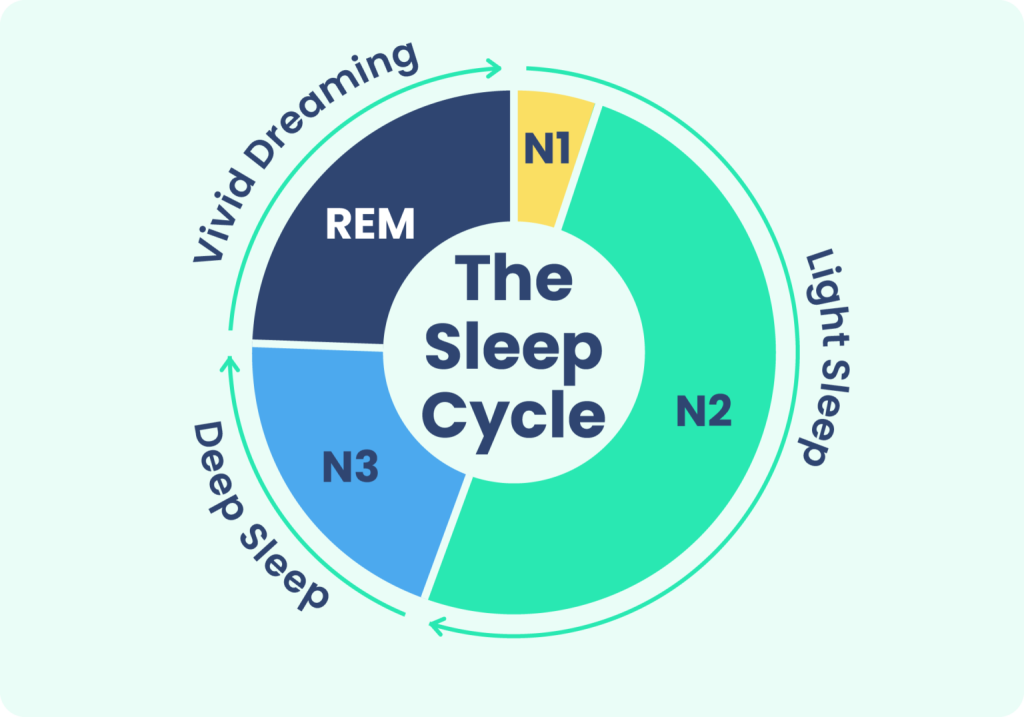
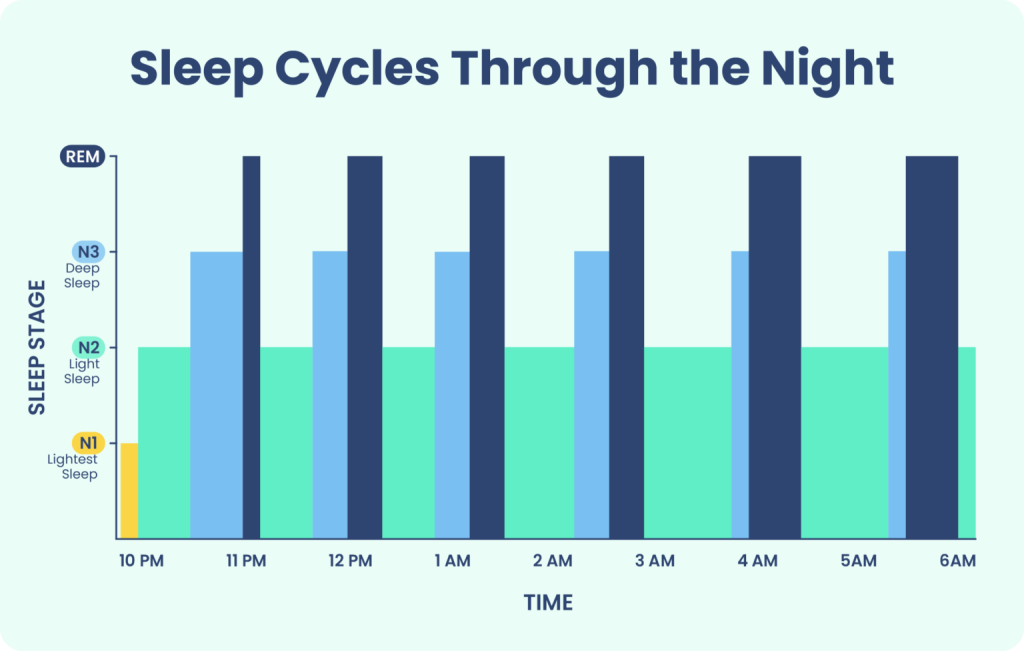
A typical night’s sleep is organized into four to six sleep cycles, each lasting about 90 minutes. Every cycle contains two main phases:
- Non-Rapid Eye Movement (NREM) Sleep – This makes up the majority of sleep and has three distinct stages (N1, N2, N3).
- Rapid Eye Movement (REM) Sleep – The final stage of the cycle, strongly associated with dreaming and brain activity similar to wakefulness.
Together, these stages create the architecture of sleep, ensuring the body and mind receive the recovery and balance they need.
Source: sleepfoundation.org
2. Detailed Sleep Stages
2.1. Non-Rapid Eye Movement (NREM Sleep)
Approximately 75% of the night is spent in NREM sleep, divided into three progressive stages.
Stage N1 (Light Sleep)
- Characteristics: The transition from wakefulness to sleep. Breathing slows, muscles relax, and awareness drifts. People may experience sudden muscle twitches known as hypnic jerks.
- Brain Waves: Alpha waves give way to slower theta waves.
- Duration: Lasts 1–7 minutes, about 5% of total sleep.
- Ease of Awakening: Individuals can be woken easily and may deny they were asleep.
Stage N2 (Deeper Light Sleep)
- Characteristics: Breathing and heart rate slow, body temperature drops, and eye movements stop. This stage supports mental restoration.
- Brain Waves: Sleep spindles (bursts of rapid activity) and K-complexes (sharp waveforms) appear, both associated with memory processing.
- Duration: Lasts around 25 minutes in the first cycle and lengthens in subsequent cycles. About 45% of total sleep occurs in N2.
- Associated Events: Bruxism (teeth grinding) often happens here.
Stage N3 (Deep Sleep or Slow-Wave Sleep – SWS)
- Characteristics: The most restorative phase of sleep. Growth, tissue repair, bone strengthening, and immune system activation occur here.
- Brain Waves: Dominated by delta waves, the slowest and highest amplitude brain activity.
- Importance: Vital for memory, creativity, and physical healing. Awakening during N3 often causes sleep inertia (grogginess and confusion).
- Duration: 20–40 minutes early in the night, making up about 25% of total sleep.
- Related Events: Sleepwalking (somnambulism), night terrors, and bedwetting are most common during this stage.
Source: sleepfoundation.org
2.2. Rapid Eye Movement (REM Sleep)
- Characteristics: Brain activity rises sharply, resembling wakefulness. The body experiences temporary paralysis (muscle atonia) except for the eyes and diaphragm. Most vivid dreams occur in REM sleep.
- Brain Waves: Beta-like activity dominates, similar to when awake.
- Importance: Critical for memory consolidation, emotional regulation, and creativity.
- Duration: Appears about 90 minutes after sleep begins. The first REM stage lasts around 10 minutes, but cycles lengthen as the night progresses, sometimes reaching up to an hour. About 25% of adult sleep is REM.
3. Factors Affecting Sleep Stages
Several factors influence how much time the body spends in each stage:
- Age: Infants spend up to 50% of sleep in REM. In contrast, deep sleep (N3) declines with age, especially after 65.
- Sleep Patterns: Irregular schedules or sleep deprivation can disrupt normal cycling.
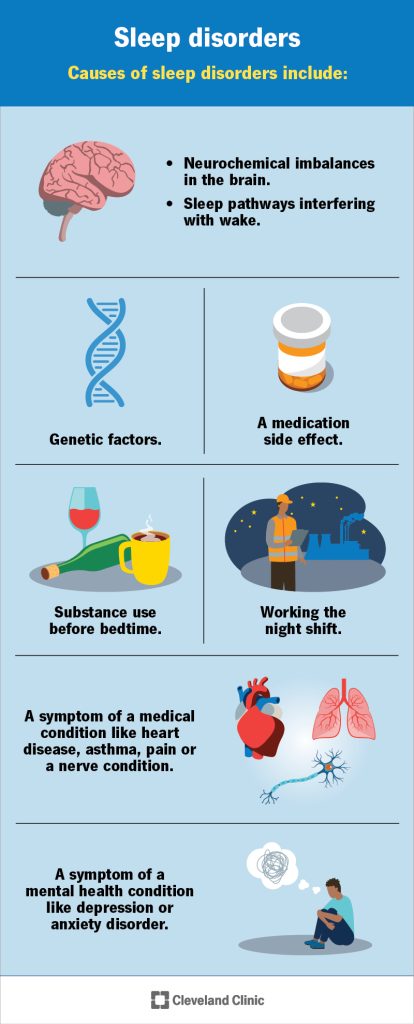
- Alcohol and Medications: Alcohol suppresses REM, while sedatives like benzodiazepines reduce N3 and REM sleep.
- Sleep Disorders: Conditions such as sleep apnea and restless legs syndrome interrupt normal progression through the stages.
For those struggling with snoring—a common disruptor of deep and REM sleep—using snoring solutions like the Asonor snoring nasal spray can help maintain healthier sleep cycles.
Source: my.clevelandclinic.org
4. Sleep Disorders and Their Impact
Sleep disorders interfere with stage progression, leading to fatigue and long-term health risks.
- Sleep Apnea: Reduces both N3 and REM sleep due to frequent awakenings. Daytime drowsiness and cardiovascular strain are common consequences. Treatments may include CPAP therapy or aids like Asonor.
- Narcolepsy: Causes sudden sleep attacks, sometimes bypassing early stages and entering REM immediately.
- REM Sleep Behavior Disorder: Paralysis fails to occur during REM, leading to physical enactment of dreams.
- Parasomnias: Sleepwalking and night terrors emerge from N3, not REM.
- Depression: Often linked with shorter REM latency (time from sleep onset to REM) and prolonged REM periods.
- Traumatic Brain Injury (TBI): Leads to reduced total sleep time, delayed onset, and less REM.
5. Why Sleep Stages Matter for Health
Scientists are still uncovering exactly why humans spend a third of life asleep, but evidence shows each stage serves vital functions:
- Restoration: Healing, growth, and immune strengthening.
- Learning and Memory: Stabilization of both declarative (facts) and procedural (skills) memory.
- Metabolic Cleansing: Removal of waste products in the brain, such as beta-amyloid proteins.
- Energy Conservation: Reduced energy demands during sleep free resources for repair.
- Cognitive and Emotional Balance: Adequate sleep enhances problem-solving, creativity, and mood regulation.
6. Diagnosing and Improving the Sleep Cycle
Diagnostic Tools
- Polysomnography (Sleep Study): The gold standard for analyzing sleep, measuring brain waves (EEG), eye movements (EOG), muscle activity (EMG), heart rhythm (ECG), and breathing patterns.
Sleep Hygiene for Better Sleep
To support healthy cycling between stages, consider these evidence-based practices:
- Consistent Sleep Schedule: Go to bed and wake up at the same times daily.
- Daylight Exposure: Natural light reinforces circadian rhythms.
- Limit Stimulants: Avoid caffeine and alcohol before bedtime.
- Optimize Sleep Environment: Keep the room dark, quiet, and cool with comfortable bedding.
- Seek Professional Help: If persistent problems arise, consult a sleep specialist. Cognitive Behavioral Therapy for Insomnia (CBT-I) and medical treatments may be necessary.
Using simple aids like snoring solutions can also be a step toward better sleep continuity and improved cycles.
Conclusion
Understanding sleep stages and the sleep cycle is key to appreciating why restful sleep is essential for overall well-being. Each stage—light, deep, and REM—plays a distinct role in healing, memory, and emotional regulation. Disruptions, whether from lifestyle habits, medications, or disorders like sleep apnea, can significantly affect health. Fortunately, with good sleep hygiene, medical evaluation, and supportive tools like Asonor, it is possible to enhance sleep quality and enjoy the restorative benefits of every stage.
Frequently Asked Questions (FAQ)
1. How many stages of sleep are there?
There are four main sleep stages: three stages of NREM sleep (N1, N2, N3) and one stage of REM sleep. Together they form the sleep cycle.
2. How long is a sleep cycle?
A typical cycle lasts about 90 minutes, and most people experience 4–6 cycles per night.
3. Which stage of sleep is the deepest?
Stage N3, also called slow-wave sleep, is the deepest and most restorative stage.
4. When do dreams occur?
Most vivid dreams happen during REM sleep, although some can occur in lighter stages.
5. How can I improve my sleep quality?
Maintain a consistent schedule, limit caffeine and alcohol, create a comfortable environment, and consider snoring solutions like Asonor nasal spray if snoring disrupts your sleep.
0 Comments